
When a Business Opportunity Becomes a Fraud Risk
Someone contacts a real estate agency because they want to buy, rent, or sell a property. They ask about the terms, provide their contact information, and request to move forward with the transaction. To the real estate agent, it may seem like just another business opportunity.
But what happens when that person is not who they claim to be?
On June 16, 2026, the FBI's Internet Crime Complaint Center (IC3) issued an alert about a fraud scheme in which criminals impersonate owners of vacant land to attempt to sell properties without their knowledge or authorization.
The Problem
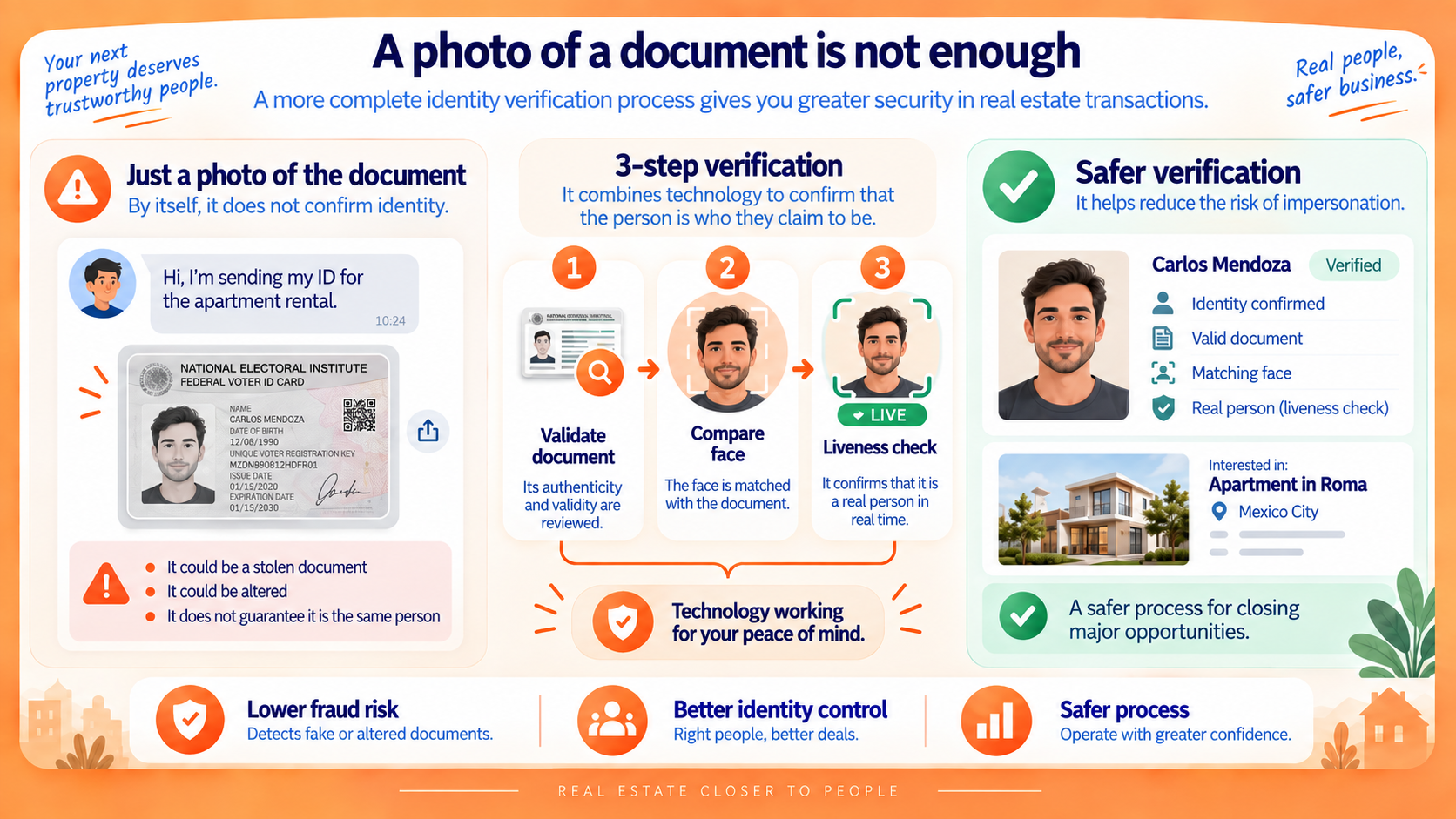
For a real estate agency, this raises a concern that goes beyond receiving messages through WhatsApp, Instagram, email, or a real estate portal. These channels make it easy to start a conversation, but knowing someone's name, seeing their photograph, or receiving a copy of their identification document is not the same as verifying their identity.
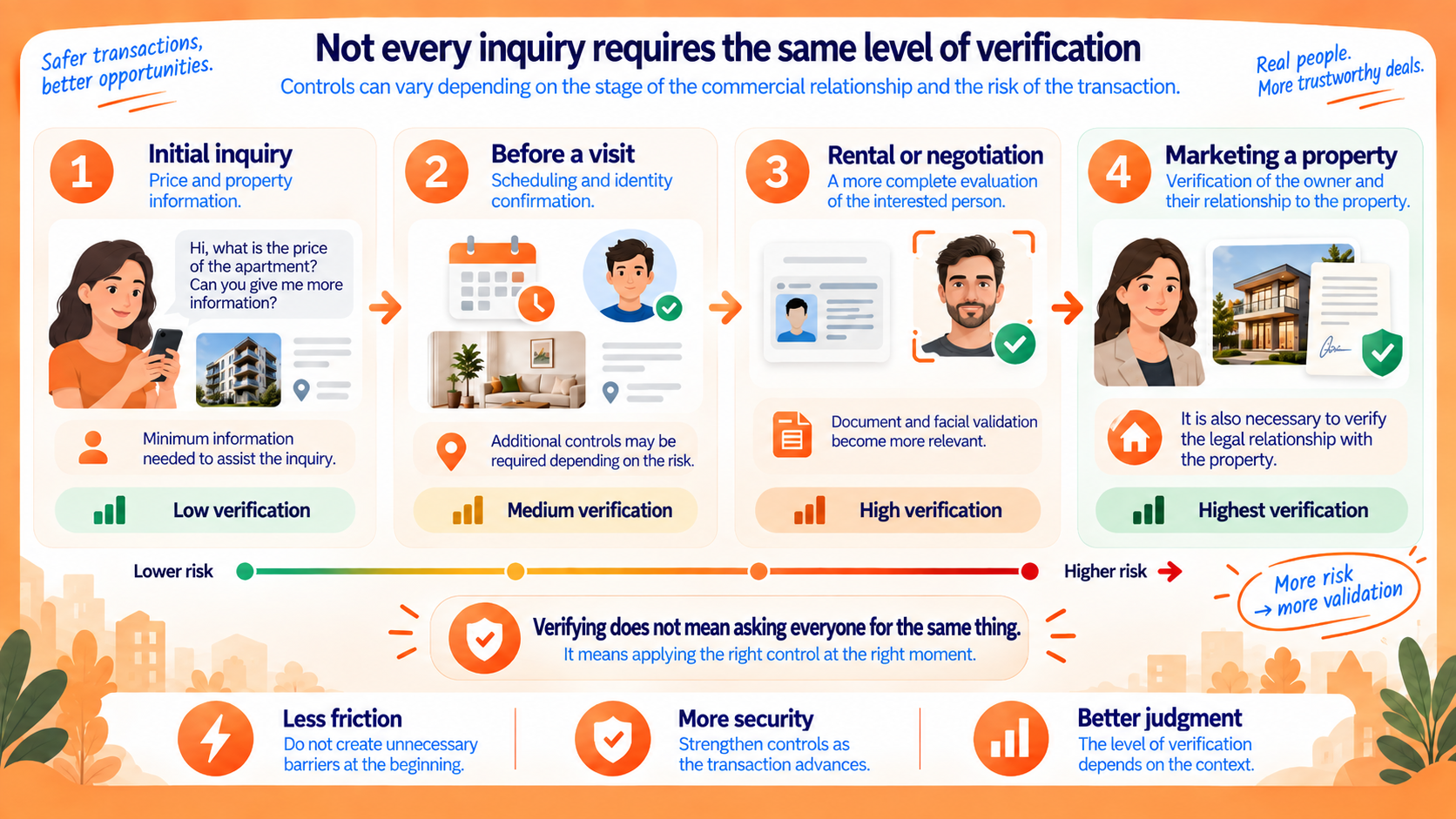
This does not mean that every prospect should undergo identity verification before receiving information about a property. The key is determining at what stage of the business relationship it becomes necessary to confirm who you are dealing with, particularly when documents will be shared, certain property viewings will be scheduled, or a transaction is moving forward.
The first step is understanding what we can actually verify when someone presents an identification document and claims to be its rightful holder.