

Back
Checklist for acquiring a property and organizing its information
Property verification

Checklist for acquiring a property without losing information during the process.

Acquiring a property listing is not just about obtaining photos, the price, and the owner's phone number.

By ReliaHouse

6 min read
Last updated:

Record the property's basic information from the start

A good property intake process starts with something simple: keeping the property's key information organized from the very first conversation with the owner.

đź’ˇ You do not need to complete every detail at once, but it is helpful to record everything that is already available from the beginning.

This helps avoid asking the same questions again later, searching through messages for missing details, or realizing that important information is still incomplete just when you are ready to list the property.

Start with the basics

  • Property type.
  • Address.
  • City or municipality.
  • Neighborhood or area.
  • Built area.
  • Number of bedrooms.
  • Bathrooms.
  • Parking spaces.
  • Floor, when applicable.

You can then complete the property profile with other details that may also influence how it is marketed, such as the socioeconomic stratum, approximate age of the property, administration or HOA fee, storage room, elevator, and any other relevant features.
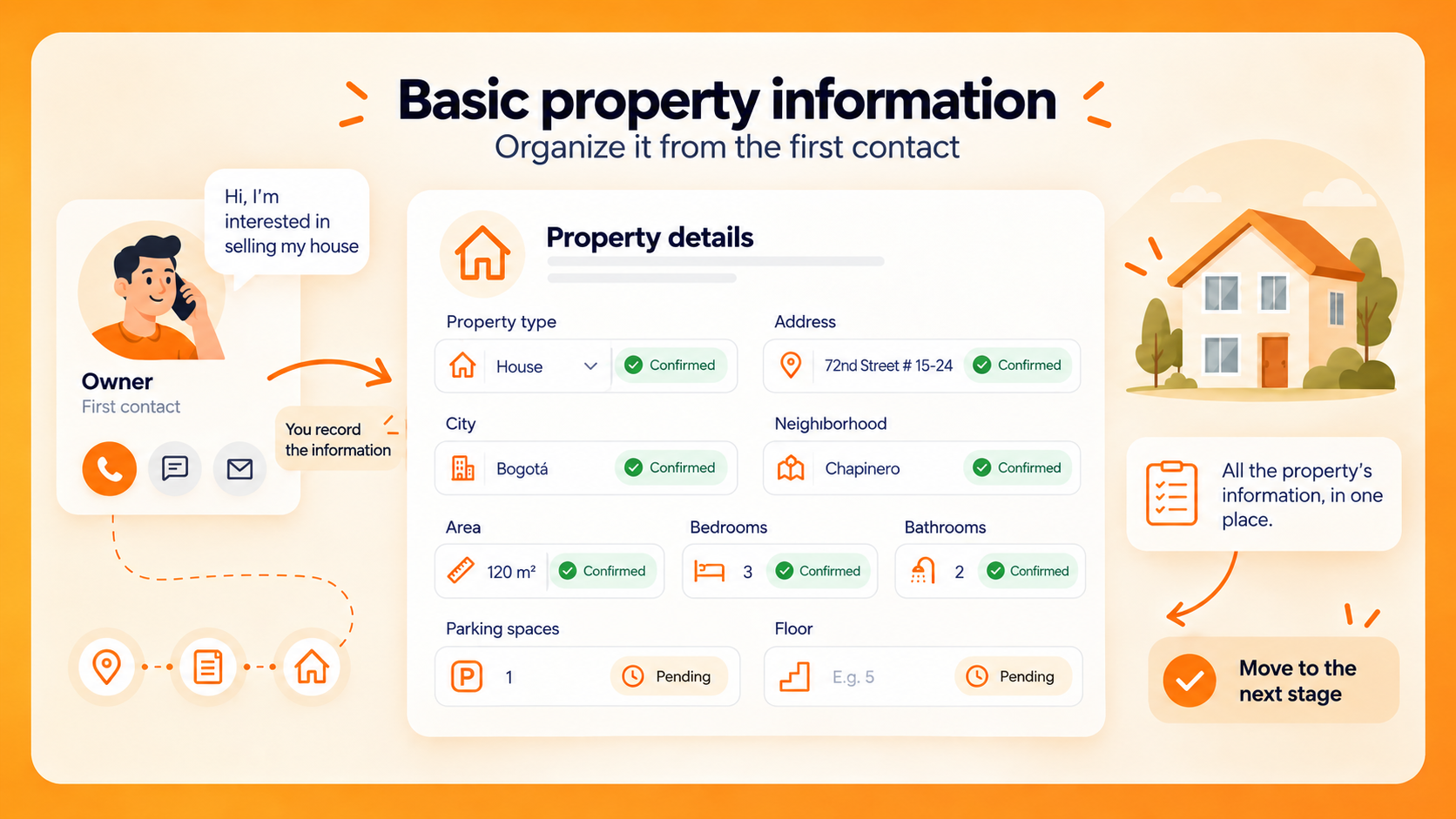
The goal is not to have a perfect property profile at that exact moment. What matters is knowing clearly which information you already have, which details have been confirmed, and what still needs to be verified.
Record the owner's information

During the property intake process, it is not enough to record the property details. You should also correctly identify the person providing the property for marketing and link their information to the property profile.

Start by recording the owner's identification and contact details. Depending on the agency's process, you may also need to request documents such as a copy of their identification.

🙅🏻 Do not assume that the person you are speaking with is necessarily the only person connected to the property.

Authorized representatives

If the process is being handled by an authorized representative, make sure that person is clearly identified from the beginning. Likewise, if the property has multiple owners, it is important to know who they are rather than assuming that the person who started the conversation is the only registered owner.

Verify the information

This information should later be compared with the relevant property documents. In Colombia, the Certificate of Tradition and Freedom can be used to review the property's legal registration status, while the Superintendence of Notaries and Registration also provides an owner index search.

Communication and follow-up

Finally, agree from the beginning on how communication will be handled throughout the marketing process. For example, define how property visits will be coordinated and how the owner would like to receive updates on the progress of the listing.

Gather the documents that are already available

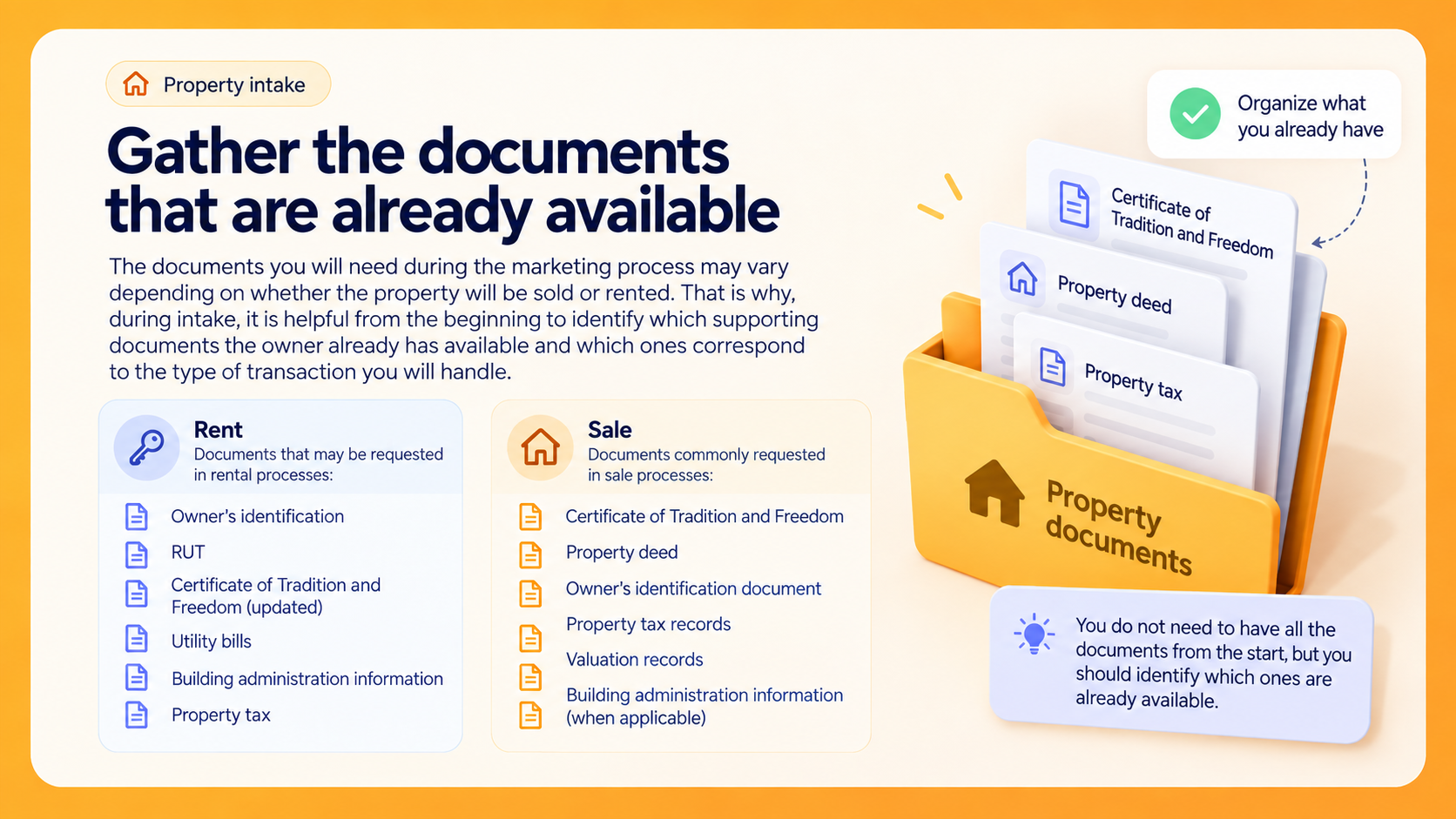
The documents you may need during the marketing process can vary depending on whether the property will be sold or rented. That is why, during the property intake process, it is useful to identify from the beginning which documents the owner already has and which ones are relevant to the type of transaction you will be handling.

Rental

For rental processes managed through a real estate agency, documents may include the owner's identification, RUT tax registration, an updated Certificate of Tradition and Freedom, utility bills, administration or HOA information, and property tax documents.

Sale

If the property is being sold, commonly requested documents may include the Certificate of Tradition and Freedom, the deed through which the owner acquired the property, their identification document, and supporting documents related to property tax, betterment levies, and administration fees when applicable.

Certificate of Tradition and Freedom

One document that deserves particular attention is the Certificate of Tradition and Freedom. It provides information about the property's legal status and ownership history and can be obtained using the property's real estate registration number through the official channels of Colombia's Superintendence of Notaries and Registration.

Define the marketing conditions

Before promoting the property, record the basic terms under which it will be offered on the market. Start by defining whether the property will be listed for sale or for rent, as well as the price that will be used in the listing.

The price deserves particular attention. In addition to knowing the amount the owner has in mind, it is useful to compare it with current market information and similar properties. Factors such as location, size, and property features can provide useful references when evaluating the asking price.

Clarify the marketing process

Make sure the owner understands how the property will be marketed and how the process will be managed. If the property is already being advertised directly by the owner or through other agencies, it is useful to know this from the beginning.

You can also agree on how property visits will be coordinated and how updates will be shared throughout the process.

Recording these conditions during the property intake stage helps ensure that the information later used in listings and conversations with potential buyers or tenants remains consistent with what was agreed with the owner.

Prepare the property listing materials

Part of the information gathered during the property intake process will later be used to create the property listing. In addition to having the key property details organized, it is important to have good photographs and a clear description that present the property accurately.

đź“· Try to take clear, well-lit photos that show the different areas of the property.

Description

The description should be based on the information you have already confirmed about the property. You can include its main features, such as the number of bedrooms, available spaces, and other relevant details that help potential buyers or tenants understand what the property offers.

Property profile

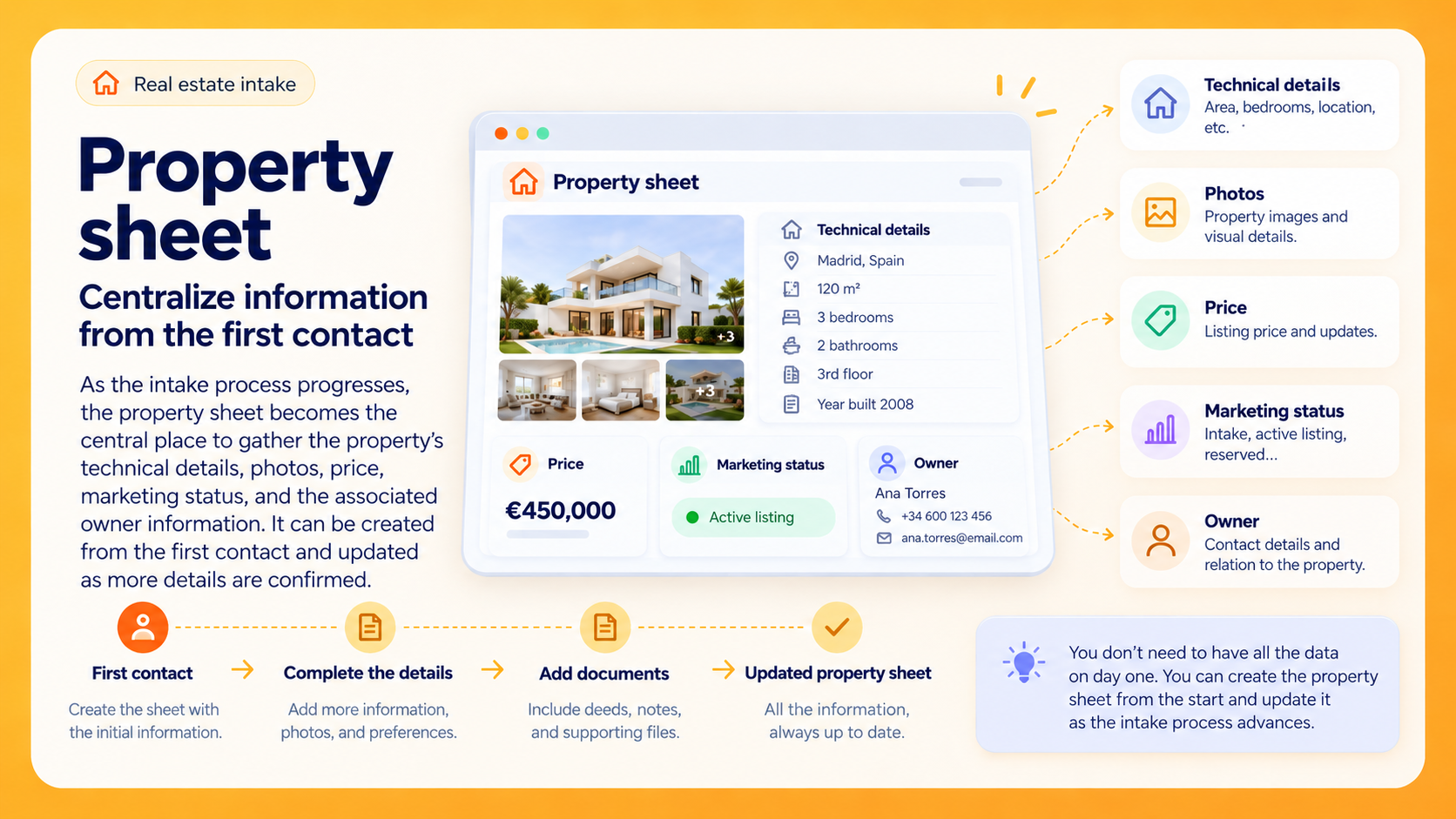
As the property intake process moves forward, try to keep all the information in one place instead of spreading it across different records. A property profile can serve as the central source for technical details, photos, price, listing status, and the owner's related information.

You do not need to wait until every detail is complete before creating it. The profile can be opened from the first contact and updated as you confirm property features, receive documents, and move through the intake process.

If you work with a team, keeping a single shared record also makes it easier for another team member to review the available information and continue the follow-up without relying only on what the person who started the intake process remembers.

Final review before marketing the property

Before you start promoting the property, take a moment to review the information gathered during the intake process.

  • Basic property details and key features confirmed.

  • Owner or authorized contact correctly identified.

  • Available and pending documents clearly tracked.

  • Type of transaction and listing price defined.

  • Items included in the offer clarified, when applicable.

  • Photos and other materials needed for the listing ready.

  • Property visits and follow-up process agreed with the owner.

  • All information centralized in a single property profile with its current status updated.

Not every detail needs to be complete from the beginning. What matters is knowing what information you already have, what still needs to be confirmed, and keeping the entire process organized before moving forward with the listing.

Try 30 days free

Digitize your real estate operation from day one.

Start for free

Try ReliaHouse free for 30 days

Digitize your real estate operation and work with more control from day one.