
Before choosing the technology, identify what work you want to reduce
When a real estate company begins exploring automation, it is easy to start with the tools: artificial intelligence, CRMs, WhatsApp automations, assistants, integrations, or new platforms. However, adding more technology does not necessarily make the company’s processes more efficient.
Technology adoption is growing rapidly across the real estate sector, but so are the challenges of turning that technology into tangible results.
In JLL’s Future of Work 2026 survey for Latin America, conducted with organizations in Argentina, Brazil, Colombia, and Mexico, AI-driven workplace transformation emerged as the top strategic priority for 47% of participants. At the same time, it was the area in which organizations reported the lowest level of preparedness.
The gap between adopting technology and actually generating value from it can also be seen globally.
JLL’s Global Real Estate Technology Survey 2025, which included more than 1,500 real estate decision-makers, found that nearly 90% of surveyed organizations were already experimenting with artificial intelligence, yet only 5% had achieved all the objectives they had set for those initiatives.
Evaluate how work is currently done
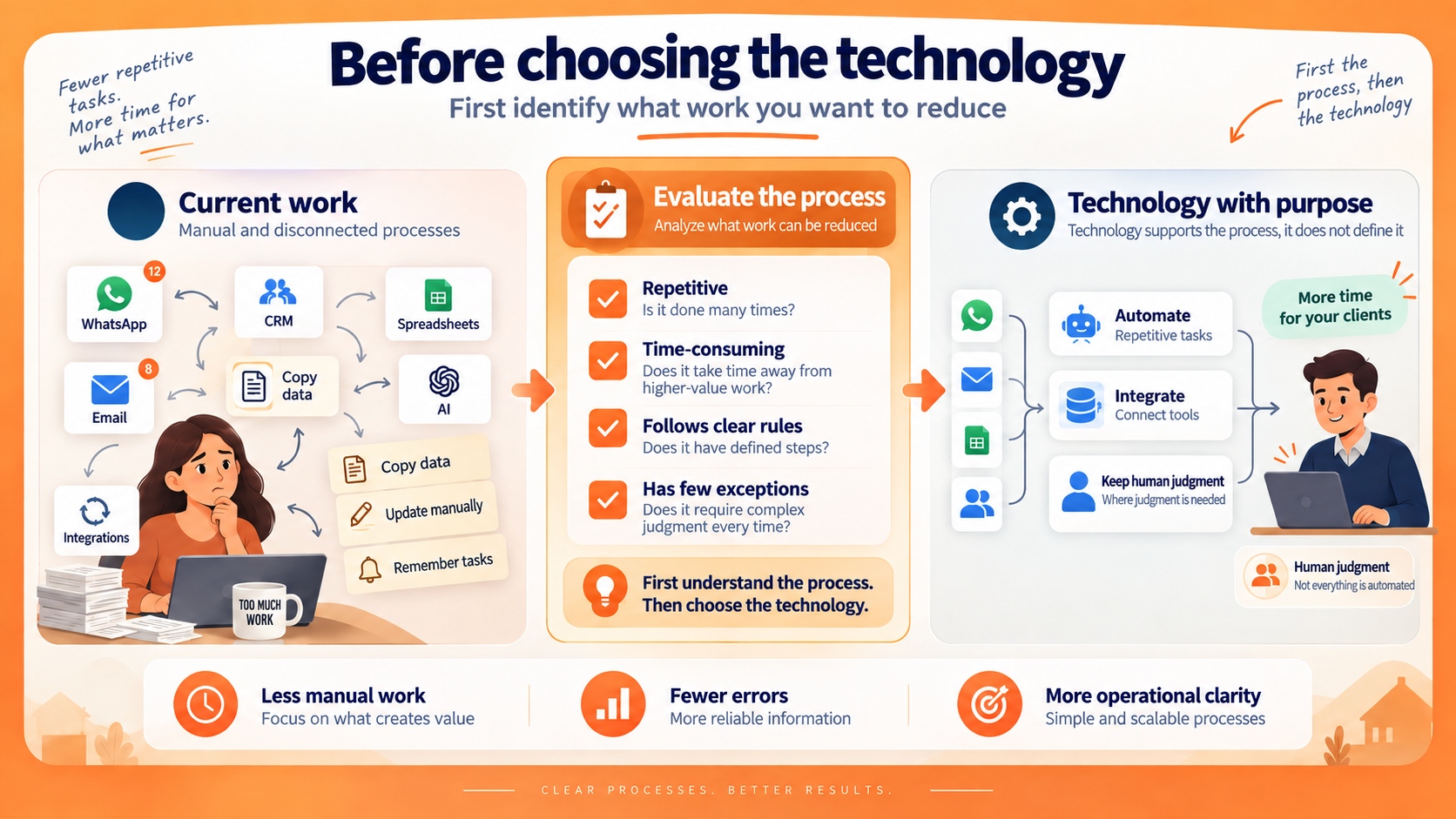
Before asking which tool to implement, it may be more useful to look at how the team currently works.
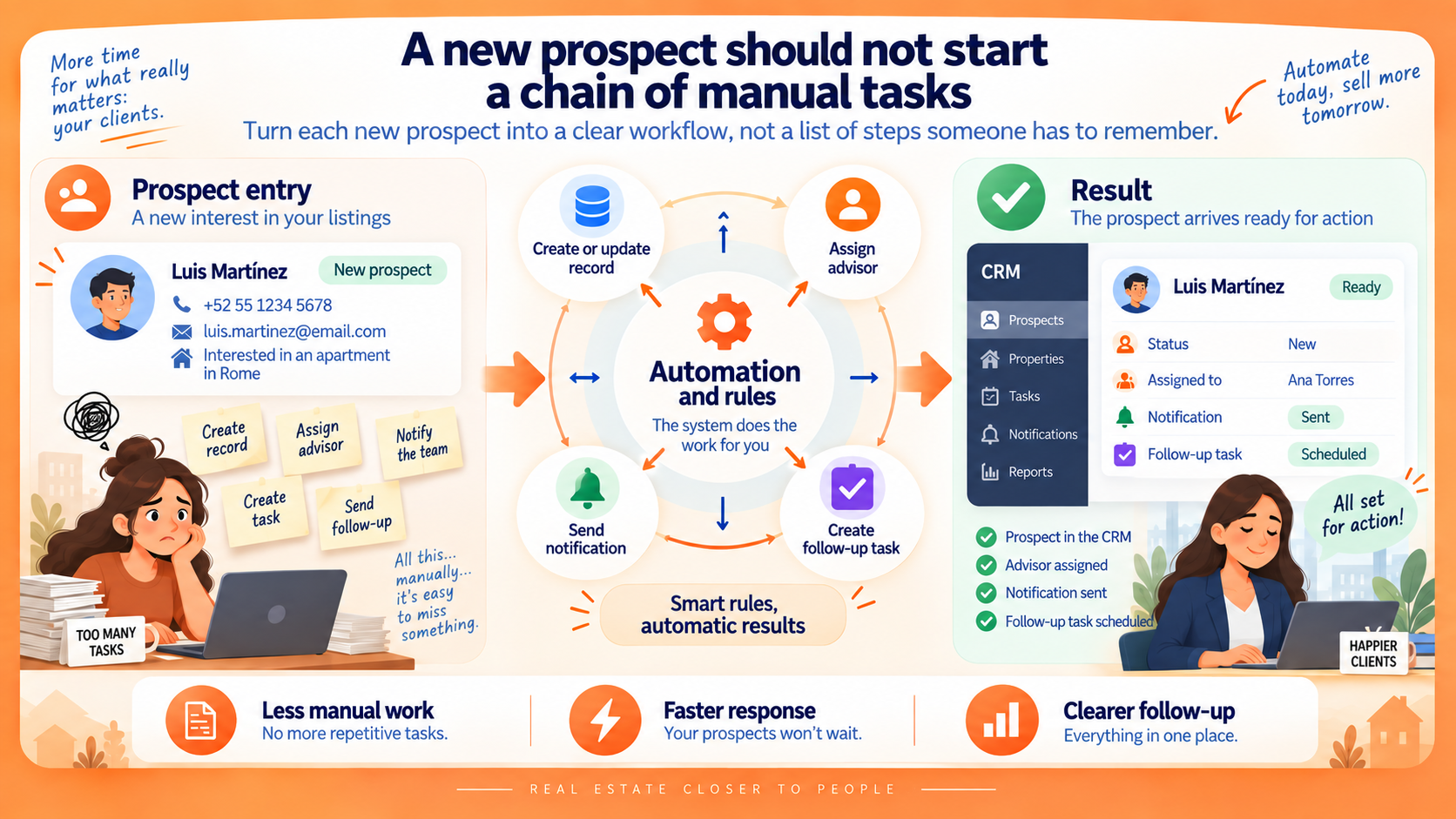
Is there information that someone copies every day from one tool to another? Are the same records created manually every time a new prospect comes in? Are there tasks that depend on someone remembering to complete them? Are there steps that follow essentially the same rules in every transaction?
These questions help shift the starting point from technology to the process itself. Automation can make sense when it removes repetitive work, reduces errors, or eliminates unnecessary manual steps. But that does not mean every activity within a real estate company should operate without human involvement.
Before automating, the first step is to identify which work is repetitive, what it costs to keep doing it manually, and where human judgment is still necessary.