
The conversation is no longer about whether AI will be used, but what it will be used for
Over the past few years, much of the conversation around artificial intelligence in the real estate industry has revolved around one question:
Will real estate professionals actually use these tools in their day-to-day work?
According to the 2026 REALTORS® Technology Report, published by NAR in September 2026, 23% of surveyed agents use artificial intelligence tools daily, while another 25% use them weekly. An additional 31% say they use them occasionally or are currently experimenting with them.
This does not mean adoption is uniform across the real estate industry, nor that these results can be directly applied to markets such as Latin America. They do show, however, that artificial intelligence is already becoming part of the real workflows of a meaningful share of real estate professionals.
The motivation also appears to go beyond simple interest in trying a new technology. In the same study, 81% of respondents said saving time was one of the main reasons for adopting new technologies, while 71% cited improving the client experience, 57% closing more transactions, and 54% reducing manual work.
The question, therefore, is beginning to change.
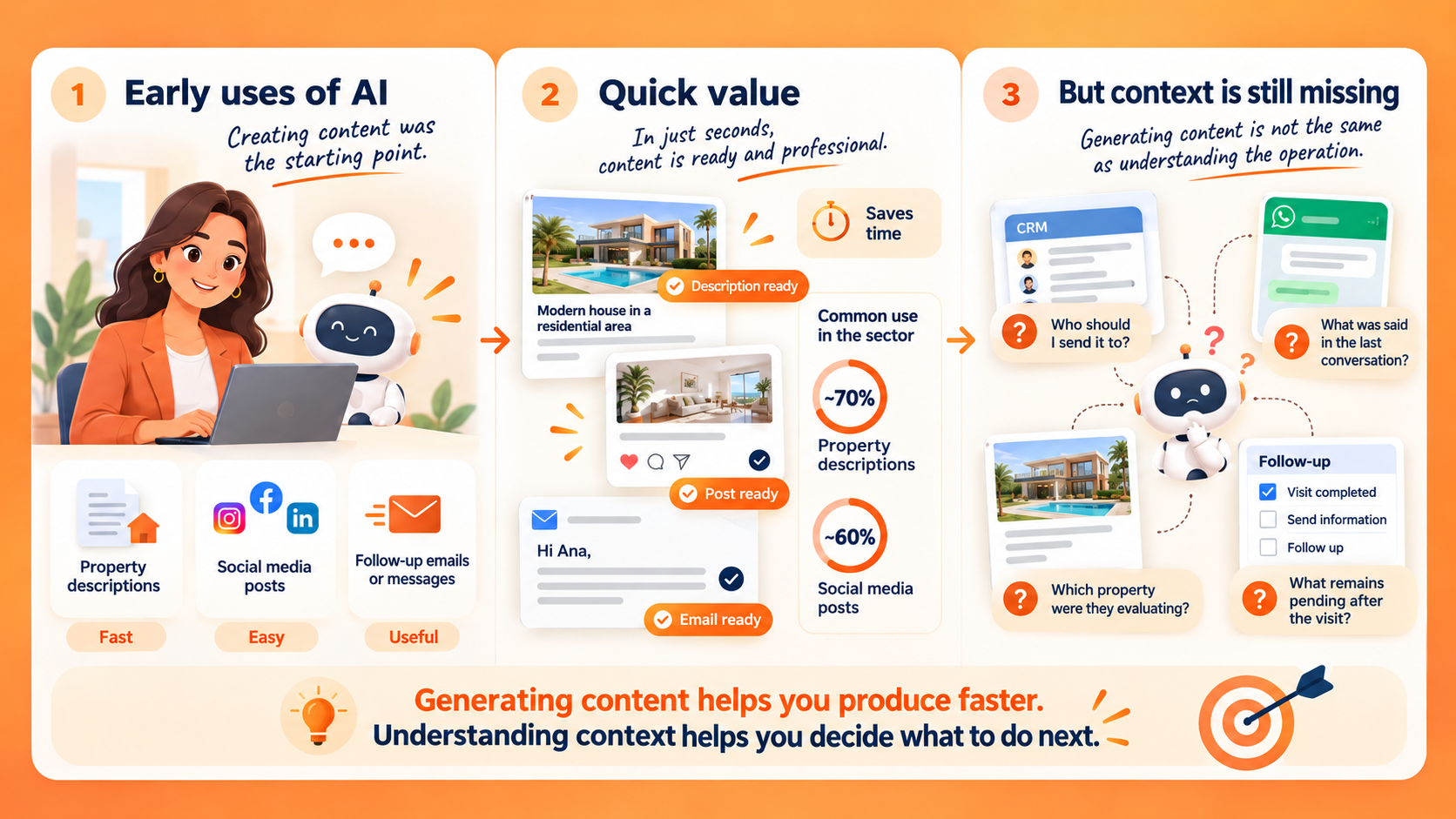
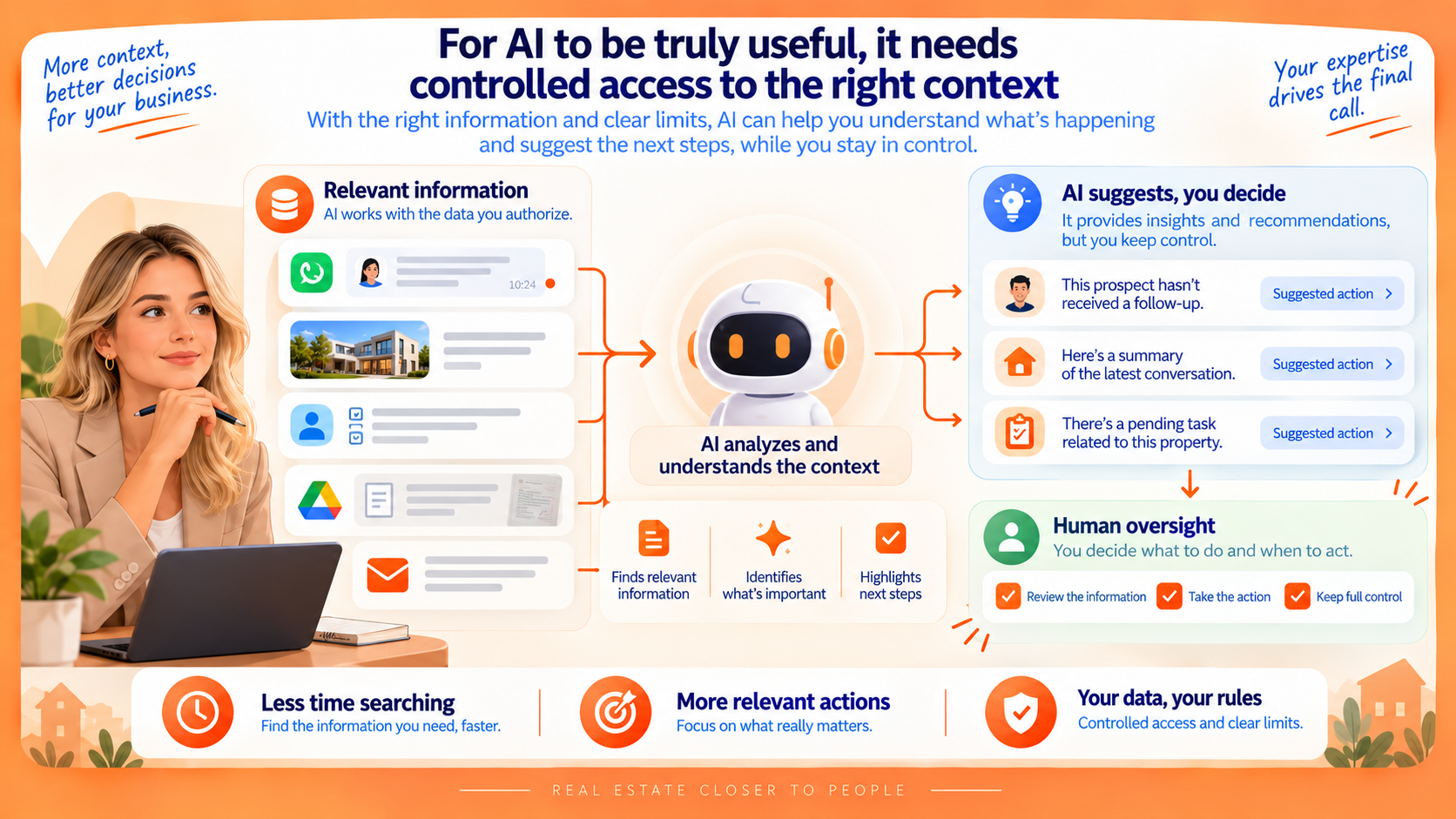
It is no longer enough to know whether a real estate company or agent uses artificial intelligence. What is more relevant is understanding what work is being delegated to it, what information it can access, and how deeply that technology actually participates in day-to-day operations.
Because adopting AI does not necessarily mean changing the way a real estate business operates. It all depends on what the technology is being used for.